AB 2748 (Quirk Silva)
About AB 2748 (Quirk Silva)
AB 2748 (Quirk-Silva) is a California bill that would exempt new affordable housing developments from the state's updated 2025 CALGreen EV-ready building standards and instead allow compliance with the older 2022 EV charging provisions. The bill was introduced by Assemblymember Quirk-Silva on February 20, 2026, with the goal of reducing affordable housing construction costs.
The National Charging Access Coalition, together with a coalition of organizations representing affordable housing, transportation equity, environmental justice, public health, labor, climate, and the electric vehicle industry, opposes the bill. While we share the goal of making affordable housing less expensive to build, we believe AB 2748 moves California in the wrong direction.
Our opposition is based on evidence that the 2025 CALGreen standards can often reduce construction and long-term operating costs while ensuring that residents have affordable access to home charging. Reverting to the 2022 requirements would reduce charging access for many low-income households, increase the need for costly future retrofits, shift costs onto tenants, property owners, taxpayers, and ratepayers, reduce opportunities for skilled electrical workers, and undermine California's transportation equity and climate goals.
The questions below explain the differences between the two building codes, address common misconceptions about costs, and summarize the reasons our coalition opposes AB 2748.
Frequently Asked Questions on AB 2748
-
Two qualitative changes were made in the 2025 CALGreen code’s EV charging provisions:
The metric was changed from percent of parking spaces to percent of dwelling units.
The requirement for full Level 2 chargers was removed when parking is assigned.
Figure 1 summarizes the key differences between the current and prior code’s requirements for EV infrastructure in multifamily housing. Figure 2 details the different types of charging infrastructure used in multifamily housing and specified by the CalGreen codes.
-
The 2025 code ensures that in multifamily housing (MFH) every household with parking gets one place to charge an EV. When the number of parking spaces exceeds the number of dwelling units and parking is assigned (which the bill sponsors say is common in the affordable housing they build), the excess spaces do NOT need to be wired for EV charging, avoiding added cost.
Because it removes the 2022 requirement for full-power Level 2 chargers in 10% of all parking spaces, the 2025 code also reduces construction costs when the number of parking spaces exceeds the number of dwelling units, and parking is assigned. The fact that the requirements when parking spaces are unassigned are more expensive incentivizes developers to provide the most affordable way to charge: through individual meters (the key to utility-regulated rates and discounted CARE/FERA EV rates). Assigned parking reduces the kVA (power) needed, further reducing construction costs, and also eliminates the need for property asset managers to manage billing for shared chargers, reducing operating costs.
-
Proponents of AB 2748 assume that, since the 2025 code requires more charging access, it must cost developers more. To evaluate this assumption, a highly experienced consultant for affordable housing developers (the founding Principal of Redwood Energy) met with cost experts for affordable housing developers in California, including several referred by the bill sponsors. Together, they agreed on these estimates for typical all-in costs (including parts, labor, wiring, electrical capacity, etc.) to install the three types of EV infrastructure in multifamily housing:
$1420 to install a “dumb” EV charging receptacle – a non-networked, low-power Level 2 (used in assigned parking);
$2770 to install a “smart” networked EV charging receptacle capable of billing – also low-power Level 2 (used in unassigned parking);
$8000 to install a full-power Level 2 EV charger (required in 10% of both assigned and unassigned parking in the 2022 code and in 25% of excess unassigned parking, if any, in the 2025 code).
Just to be safe, $7,000 was added for each project to account for the electrical panel.
These amounts were used to calculate total EV infrastructure installed costs when following the 2022 Supplemental and 2025 CALGreen codes for a 100-unit, $50,000,000 apartment project in five different scenarios:
Scenario 1: when the number of parking spaces is less than the number of dwelling units (as may become more common in transit-adjacent urban housing);
Scenario 2: when the number of parking spaces is equal to the number of dwelling units (which is necessary for equity);
Scenarios 3, 4, and 5: when the number of parking spaces exceeds the number of dwelling units (as the bill sponsors said is typical in most of the affordable housing they build), with parking to unit ratios of 1.5 to 1; 2 to 1; and 2.5 to 1, respectively.
Calculating the cost to install the EV infrastructure required by the 2022 Supplemental and 2025 CALGreen codes in each of these five scenarios yielded the following key results:
No matter which code is followed, assigned parking is always less expensive than unassigned parking, so developers who are cost sensitive will choose to assign parking.
When the number of parking spaces is the same or less than the number of dwelling units and parking is assigned, there is essentially no difference in cost between the two codes; in addition, for roughly the same cost, the 2025 code provides twice as much charging access (see Figure 3);
When the number of parking spaces is greater than the number of dwelling units and parking is assigned, the 2025 code costs less than the 2022 Supplemental code (see Figures 4 and 5).
The cost analysis does not support the author’s claim that “We are seeing EV-ready infrastructure costs increase by as much as three times compared to the 2024 code requirements.” While it’s true that, if a developer chooses unassigned parking, it will cost more to follow the 2025 code, cost-conscious developers will choose the least expensive option: assigned parking. Following this pathway, they will either save money under the 2025 code or have essentially the same cost as under the 2022 code.
Since developers who are cost conscious will choose the least expensive pathway—assigned parking—the most relevant cost comparisons are between the 2022 Supplemental and the 2025 CALGreen codes’ provisions for assigned parking. Figure 6 compares and contrasts these provisions across the five scenarios, showing cost parity or cost savings with the 2025 code.
For those seeking more specificity, Figure 7 shows the actual cost differences between the two codes when developers choose the lower-cost option of assigning parking. Note that the miniscule extra cost of the 2025 code with 50 parking spaces is less than the cost of ONE networked receptacle, and with 100 spaces is less than the cost of ONE full charger.
In sum, the current 2025 CALGreen code’s EV charging provisions, depending on the ratio of parking spaces to dwelling units, either cost essentially the SAME as or LESS than the prior 2022 Supplemental code’s requirements. The cost savings come from the fact that the 2022 code is based on the percent of parking spaces and requires full Level 2 chargers in 10% of all parking spaces, whereas the 2025 code is based on the number of dwelling units and avoids the need for full chargers if parking is assigned.
-
While the 2025 code costs a little more in some cases, a little less in others, or essentially the same, the actual cost differences between the 2025 and the 2022 Supplemental codes are very small when compared to the total cost of building multifamily housing.
In Figure 8, the cost to install the required EV charging infrastructure under each of the 12 variations studied is represented to scale by the skinny red bars just barely visible above the x-axis to show the portion they make up of a total project cost of $50M (the blue bar on the far right). Note that $50,000,000 is on the low-end of the funding limits set by the California Tax Credit Allocation Committee (CTCAC) for a 100-unit affordable housing community in California.
The boxed values in blue (for the 2022 code) and green (for the 2025 code) at the bottom of the graph show the percent of total development costs represented by the EV infrastructure required in each of the 12 cases. This percentage ranges from ~0.15% when following either the 2022 or 2025 CALGreen codes for 50 assigned parking spaces to ~0.78% when following the 2025 code for 150 unassigned spaces (though just ~0.29% when following the 2025 code for 150 assigned spaces). By comparison, affordable housing developers’ fees typically range from 10% to 15% of the total development cost (see Figure 9).
Thus, the claim that the 2025 CALGreen code’s EV infrastructure requirements represent an onerous burden is not justified by the actual cost. If an additional 0.78% ($390,000 under the 2025 code in Scenario 3 for 150 unassigned parking spaces at a 100-unit project) is enough to stop a $50,000,000 project from penciling out, the developer could reduce the added cost to just 0.29% ($150,000) by assigning parking instead. This would cost them less than the 0.42% ($210,000) that the 2022 code requirements would cost.
If the fraction of additional cost from EV infrastructure is truly enough to stop an affordable housing project from securing enough funding, it would be more reasonable for the developer to reduce their fee by 0.15-0.3% and thus avoid burdening tenants, property managers, taxpayers, and ratepayers with much higher costs down the road. If the developer’s fee is 12% ($6,000,000), reducing it by 0.3% ($150,000) would still yield the developer $5,850,000.
-
No one questions that housing is expensive to build in California and that creative solutions are needed to reduce costs. But it seems that the modest requirements for EV charging receptacles in the 2025 CALGreen building code are being unfairly blamed—especially because, in common use cases, it costs less to comply with the 2025 code provisions than with the 2022 ones (see above).
The 2025 CALGreen code’s EV charging provisions were carefully designed to minimize the cost to provide charging access and are not the reason for the slow pace of building affordable housing. Other factors, such as rising costs of lumber, labor, and land, are driving up the cost of building housing. Regardless, any solution to building more affordable housing must not penalize the residents who will live in these buildings by adding to their transportation burden—likely into the next century.
-
Interest in electric vehicles is surging. As Figure 10 shows, in the third quarter of 2025, 29.1% of auto sales in California were EVs. A previous survey by Veloz found that nearly 40% of gas-powered car owners in California would consider an EV for their next purchase — and this was before the recent surge in gas prices this spring, which has led to an increase of 20% in online searches for EVs.
With rising gas prices, demand is up more. Even with reduced federal government support for EVs, the share of EV sales in the U.S. is projected to increase to 100% by the year 2045 (see Figure 11).
-
As gas prices surge and the cost of EVs drop, low-income and disadvantaged communities are precisely those who most need and deserve access to the most affordable cars to own, fuel, and maintain (used EVs), and to the most affordable and reliable place to charge: at home. In California, the cost to charge at a public charging station is often much more expensive than home charging (see Figure 12).
Having access to residential electricity rates is incredibly valuable. This spring, California EV drivers who charge at home have widened their fuel cost savings advantage over gasoline car drivers to $166/month (which adds up to nearly $2000 per year). They pay the equivalent of about $3/gallon, assuming the average 2025 EV efficiency of three miles/kWh and a comparable gas vehicle getting 30 MPG. To be able to take advantage of this cost savings—and avoid being at the mercy of surging gas prices and higher-cost public charging—drivers who live in affordable housing need affordable EV charging, and that means at home.
Therefore, it’s vital that new affordable housing communities provide EV charging access for each household with a parking space (which is what the 2025 CALGreen code ensures for all housing types). Without access to home charging, few of these residents will be able to take advantage of what have now become the most affordable cars on the market—used EVs—and the least expensive way to fuel them—charging at home.
-
By ensuring that every household with parking in new multifamily housing communities is provided with one EV Ready receptacle or charger, the 2025 code avoids the need for costly future retrofits. It is critical to install the outlet, breaker space, and conduit and to rightsize the transformer at the time of construction because that is when builders can take advantage of economies of scale and install infrastructure when workers are already onsite and before the ground is covered in concrete and asphalt.
The cost to retrofit and add charging later can be orders of magnitude more expensive than installing charging access at the time of construction. Peninsula Clean Energy (PCE) found that retrofitting apartment parking spaces with just Level 1 (“trickle charge”) EV chargers (120 V, 20 amp) costs about $2,700 each and with Level 2 chargers costs about $7,000 each, on average. Those slow Level 1 charger retrofits cost twice as much as installing much faster low-power Level 2 charging outlets, and the Level 2 charger retrofits cost five times more than installing a low-power Level 2 outlet at the time of construction. Sometimes the additional cost to retrofit apartments and condos can be even more.
For example, GreenWealth Energy, a company that received a grant from the California Energy Commission to install Level 2 chargers at existing multifamily homes, found $7,200 to be the average cost per port for projects that qualified. Additionally, many multifamily homes could not qualify for this project because the cost to upgrade the existing electrical infrastructure made them cost prohibitive or the ADA parking requirements and loss of parking spaces made the projects untenable.
If newly constructed multifamily homes do not take into account the electrical infrastructure and ADA/parking space requirements specified in the 2025 CALGreen code, the residents of these buildings will also be condemned to significantly higher costs to retrofit for EV charging—likely denying most of the residents access to home charging decades into the future.
If new multifamily housing does not take into account EV charging during design and construction, the cost impacts can be very high. PG&E’s EV charging incentive programs found that when significant upgrades were required, the cost to install EV charging in existing multifamily housing was $18,647 per space rather than the anticipated $4,443 (see Figure 13). Moreover, it cost Muir Commons CoHousing development in Davis, California, a whopping $29,000 per charging port because their electrical infrastructure was at capacity and required a new transformer, distribution panels, and conduit to be run throughout the property.
Installing EV charging infrastructure during initial construction isn’t just a matter of convenience for workers and lower cost, it’s the most fiscally responsible choice. The state of California, community choice aggregators (CCAs), and municipal and investor-owned utilities continue to spend millions retrofitting existing multifamily housing with charging access (see Figure 14). The cost of these publicly-funded programs don’t disappear, they become a burden for taxpayers and ratepayers.
When we build housing that will last for many decades, likely into the next century, we must build it to match future, not current, demand. As they say in hockey, don’t skate to where the puck is—skate to where it’s going to be. This means that all new housing units in California need to include EV charging infrastructure from the start, enabling vehicle-to-grid opportunities for every household with parking and avoiding significant retrofit challenges and costs.
-
The state of California as well as California utilities and Community Choice Aggregators (CCAs) are investing millions of taxpayer and ratepayer dollars tomake EVs affordable for low-income residents (see Figure 15). The website DriveClean.ca.govhelps residents find specific incentives by zip code. The following list includes a sampling of available programs:
Pre-Owned EV Rebates (PG&E/SCE): Customers of PG&E or SCE can receive $1,000 for a used EV, or $4,000 for income-qualified applicants (Rebate Plus).
Clean Cars 4 All: Provides up to $12,000 for low-income Bay Area residents to replace older vehicles with cleaner options (with many used EVs priced under $12,000, drivers of older gas-burning cars can essentially get an EV for free).
Valley Can Vehicle Replacement Program: Offers a similar deal for residents of the San Joaquin Valley Air Pollution Control District who earn 300% or less than the federal poverty level; other Air Districts offer similar programs.
CCA-provided rebates: Customers of SVCE can get a $2,000 rebate for an EV; over half of the households in SJCE territory are eligible for 4000 off the sales price of a new or used EV. Other CCAs around the state offer similar rebates.
The statewide Driving Clean Assistance Program: Offers down-payment assistance via upfront grants that are paid directly to the dealerships and do not need to be paid back. “With DCAP you receive more than just the funding to get into a clean air vehicle, you also receive financial coaching, counseling, and access to fair financing options.”
Governor Newsom proposed a new rebate program to provide a point-of-sale discount off the price of a new or pre-owned EV for first-time EV buyers.
With this range of rebates and the availability of many used EVs under $10,000, if someone can afford to buy a gas car, they can afford to buy an EV, unlocking huge savings on maintenance and fueling costs—IF they have at-home charging. So why would the state give with one hand these valuable incentives to help residents access EVs and then, with the other hand, reduce access to at-home charging for the lowest-income residents?
-
Installing raceways, conduit, breaker space, electrical panels, EV charging receptacles, and chargers takes skilled labor. Reverting affordable housing standards back to the 2022 CALGreen Code would be a loss for workers, since installing EV charging infrastructure at the time of construction provides family-sustaining jobs for many electricians and other construction workers. Therefore, the California State Association of Electrical Workers (CSAEW), the American EV Jobs Alliance, and Green Technical Education & Employment (Green Tech) all oppose AB 2748.
-
While the main reason to ensure that all residents who drive have access to home charging is to reduce their transportation burden and make life more affordable, the transition to zero-emission vehicles is also key to California’s ability to reach our clean air and climate goals. According to the California Air Resources Board (CARB), emissions from gas-burning vehicles account for nearly 40% of the state’s greenhouse gas pollution. The transportation sector is also responsible for “the majority of smog-causing pollutants and is a significant source of toxic air contaminants that directly impact community health.”
Due to these pressing concerns, Governor Newsom issued Executive Order N-79-20, requiring that all new passenger vehicles sold in the state be zero emission vehicles (ZEVs) by 2035. This is only feasible if drivers can reliably, conveniently, and affordably fuel a ZEV, which usually means at home. Since the Governor's EO was announced, the state has been racing to reduce barriers to driving electric for low-income Californians and renters by investing millions of dollars to provide financial support for ZEVs and chargers (as discussed above). But if, during the next half decade, the state’s 2025 CALGreen building standards are rolled back to the outdated 2022 code, fewer residents of new affordable housing will be able to charge at home– making it harder for them to transition to EVs despite the many financial incentives to do so.
-
Of the 2.5 million new housing units that state regulators mandate California plan for by 2031, over 40% are targeted for lower-income households (defined as very low- and low-income). If affordable housing developers are allowed to follow the outdated 2022 code, many of these units will lack access to home charging, with unintended consequences.
-
Some skeptics argue that few residents of affordable housing drive an EV, and therefore question why they need charging. The reality is, the number one barrier to owning an EV is not the purchase price–it’s a lack of home charging. Denying affordable housing residents access to home charging because they don’t currently drive EVs is a self-fulfilling prophecy, perpetuating barriers to full participation in the EV revolution. If residents don’t have a place to charge at home, they are unlikely to get an EV and will remain at the mercy of spiking gasoline prices. If they already own an EV, they must rely on more expensive, less convenient public charging options.
An eye-opening article in Canary Media likens apartments without charging to the “cold-water flats” of the past century that lacked hot water. In order to reduce construction costs, developers as late as the mid-1960s in many U.S. cities built low-income housing (usually in communities of color) without hot water pipes. It wasn’t until building codes required that ALL residential housing provide hot water pipes that ALL U.S. residents got access to hot water at home. Contrary to the developers’ fears, providing hot water pipes did not stop the construction of low-income housing.
Figure Library
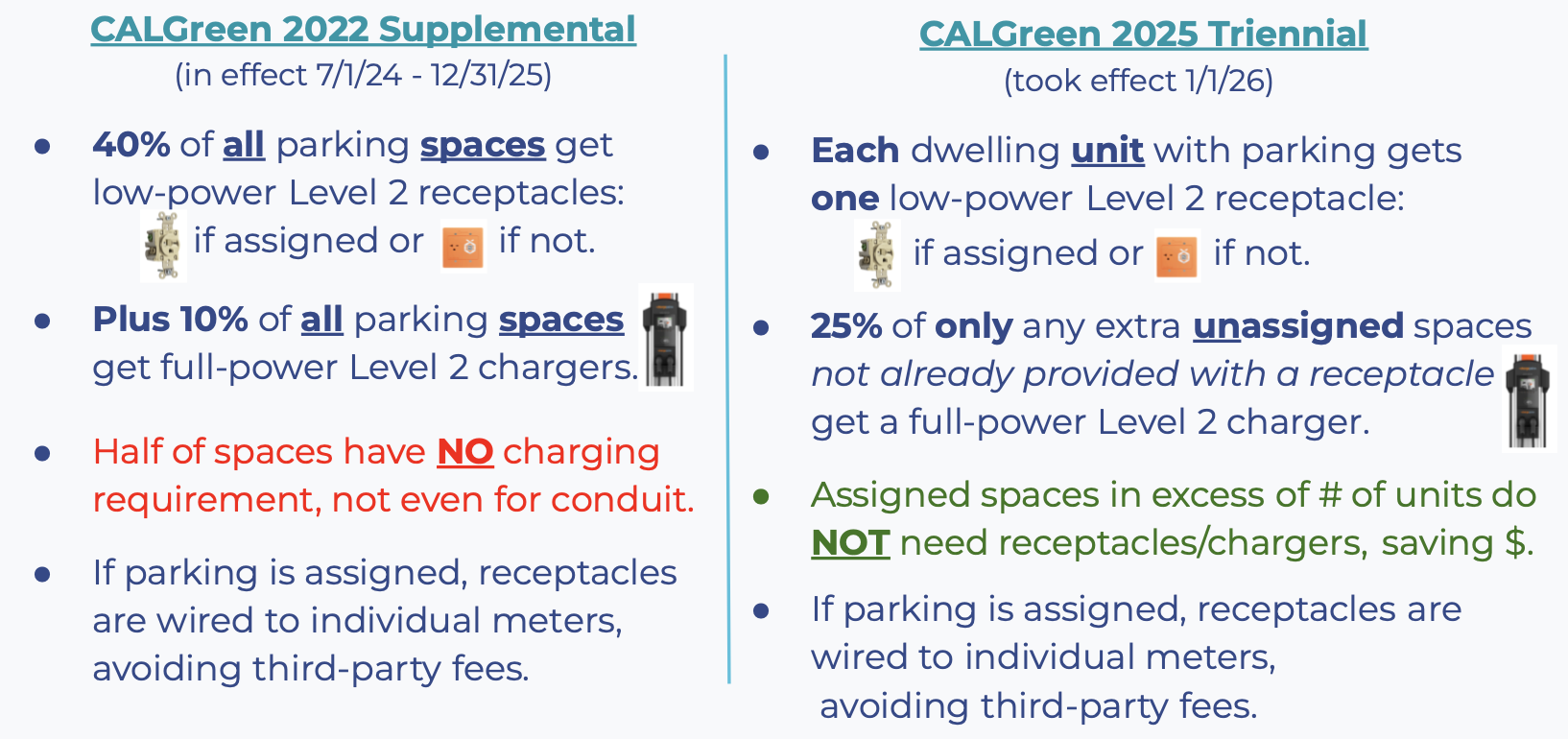
Figure 1. EV infrastructure requirements of the 2022 Supplemental and 2025 CALGreen codes for multifamily housing.
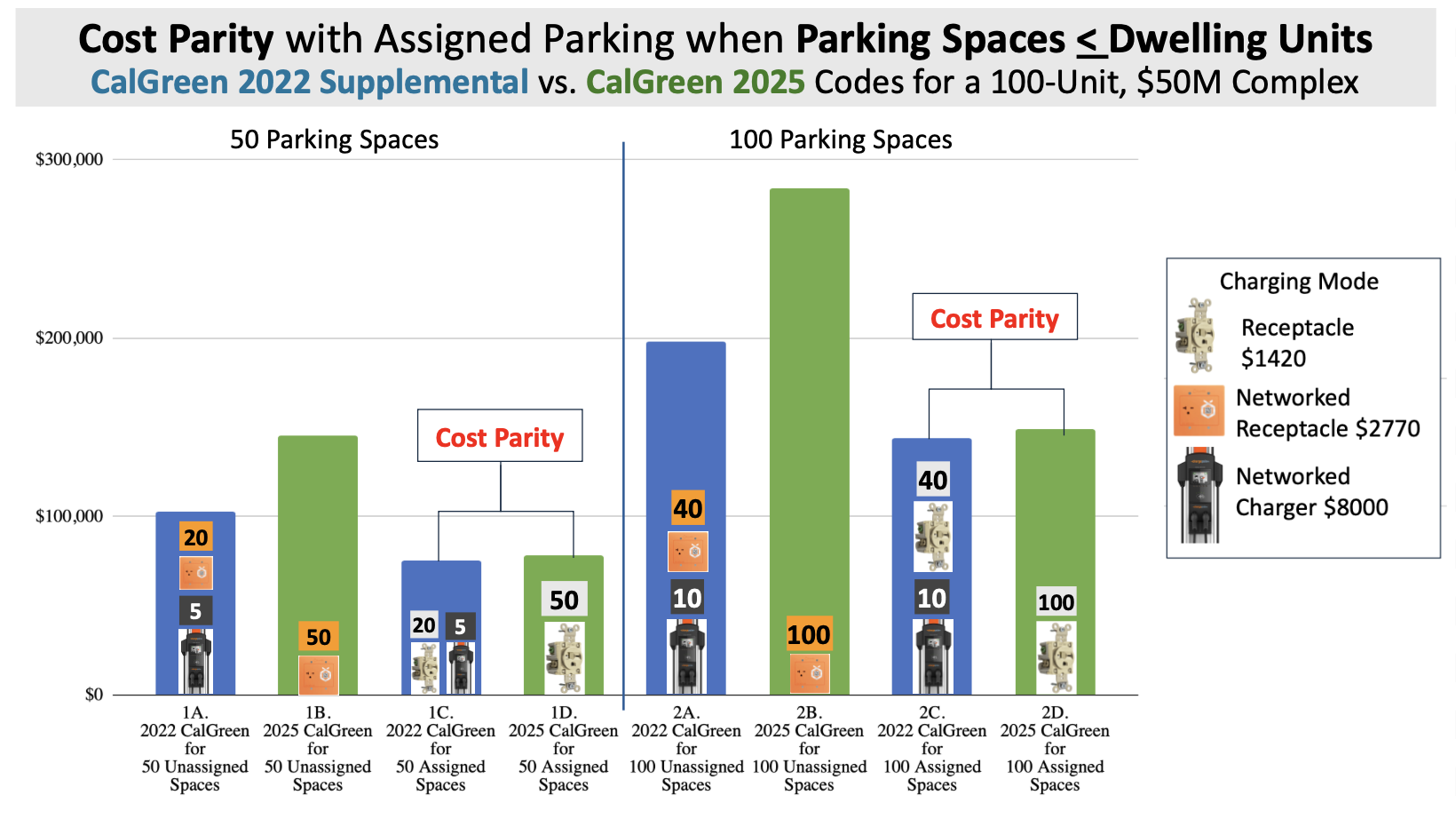
Figure 3. Costs when the number of parking spaces is the same or less than the number of dwelling units.
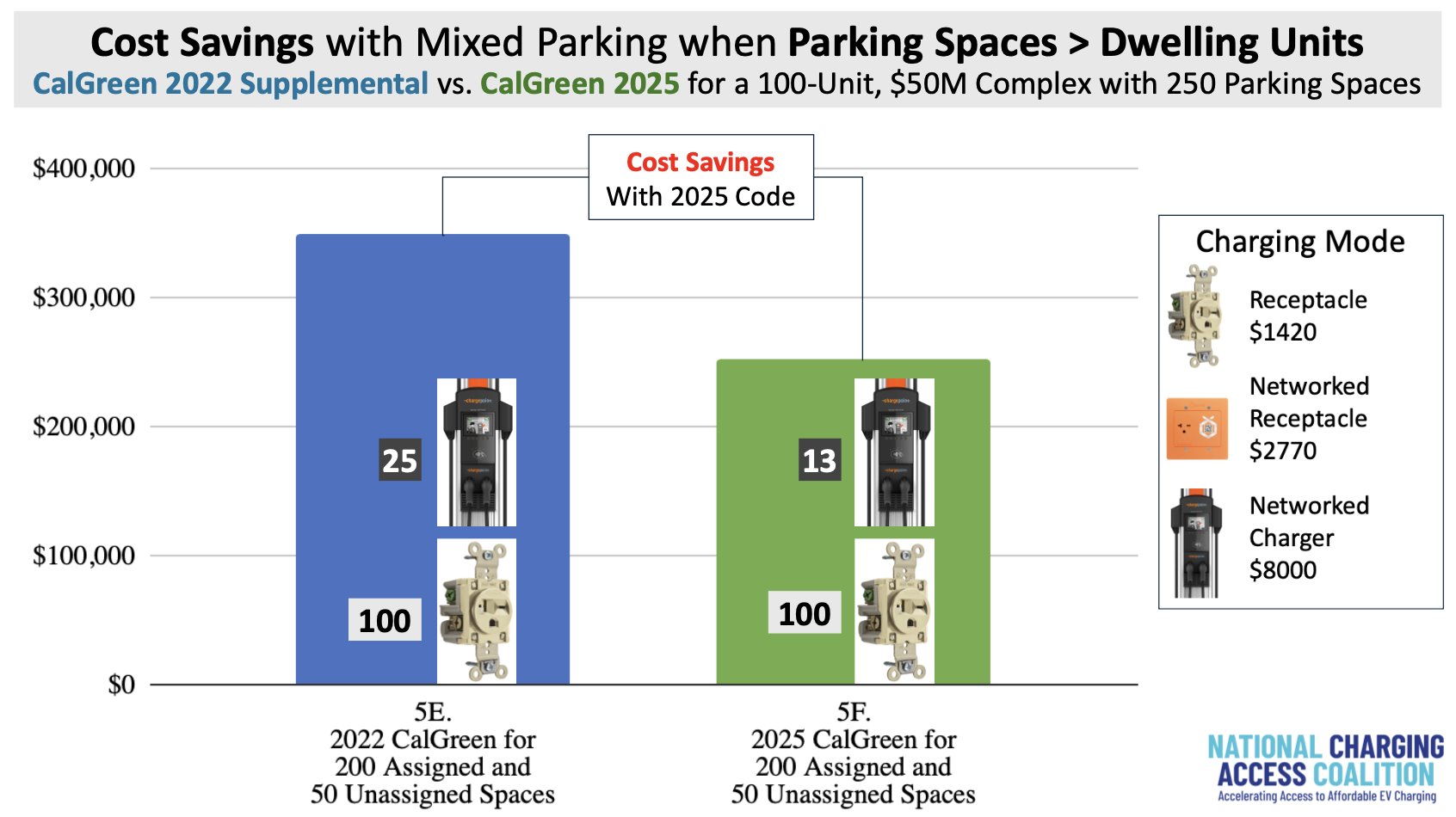
Figure 5. Costs when parking spaces exceed dwelling units and there is a mixture of parking types.
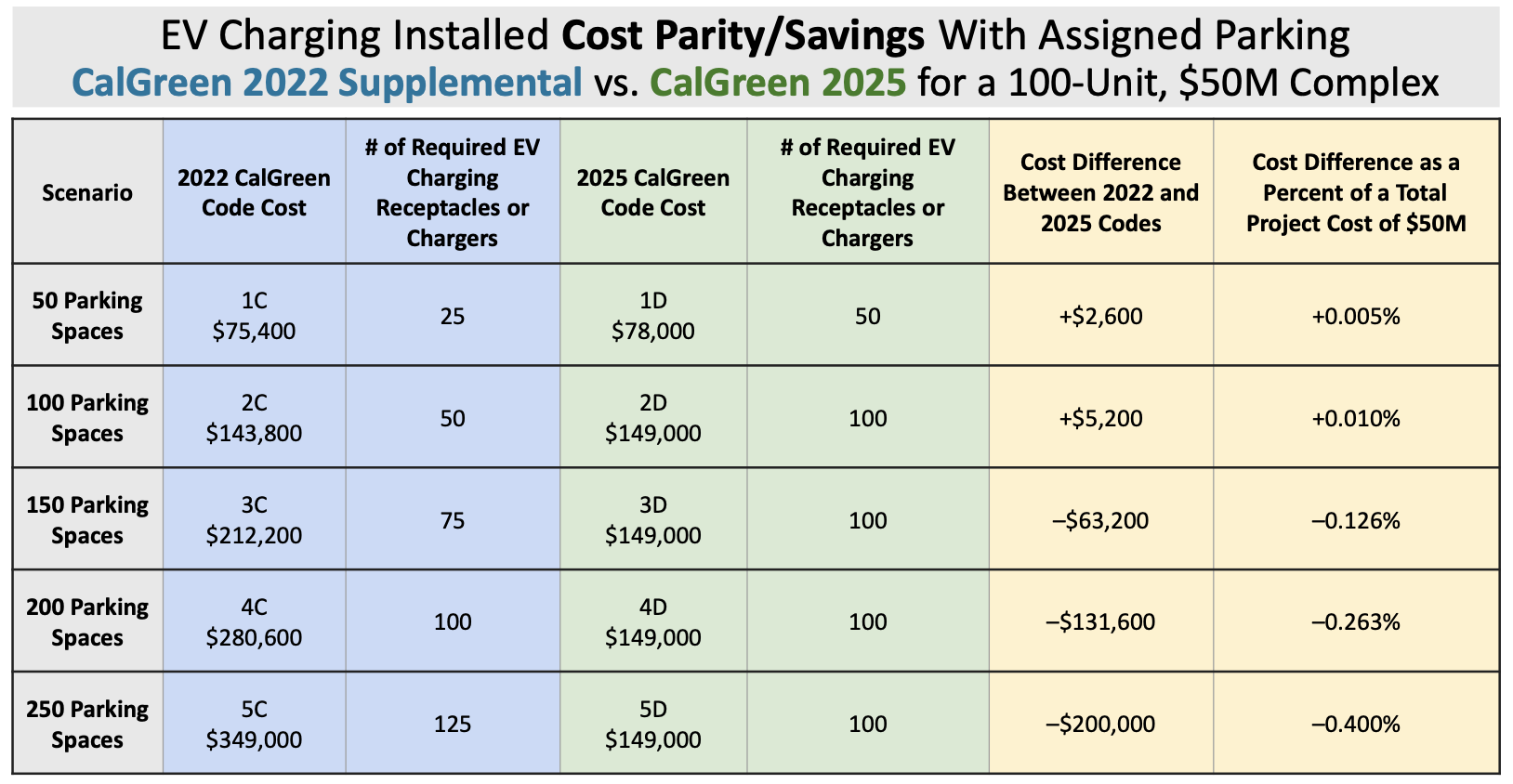
Figure 7. Estimated EV charging installed costs for assigned parking spaces per the 2022 Supplemental and 2025 CalGreen codes, with cost differences as a percentage of total project cost.
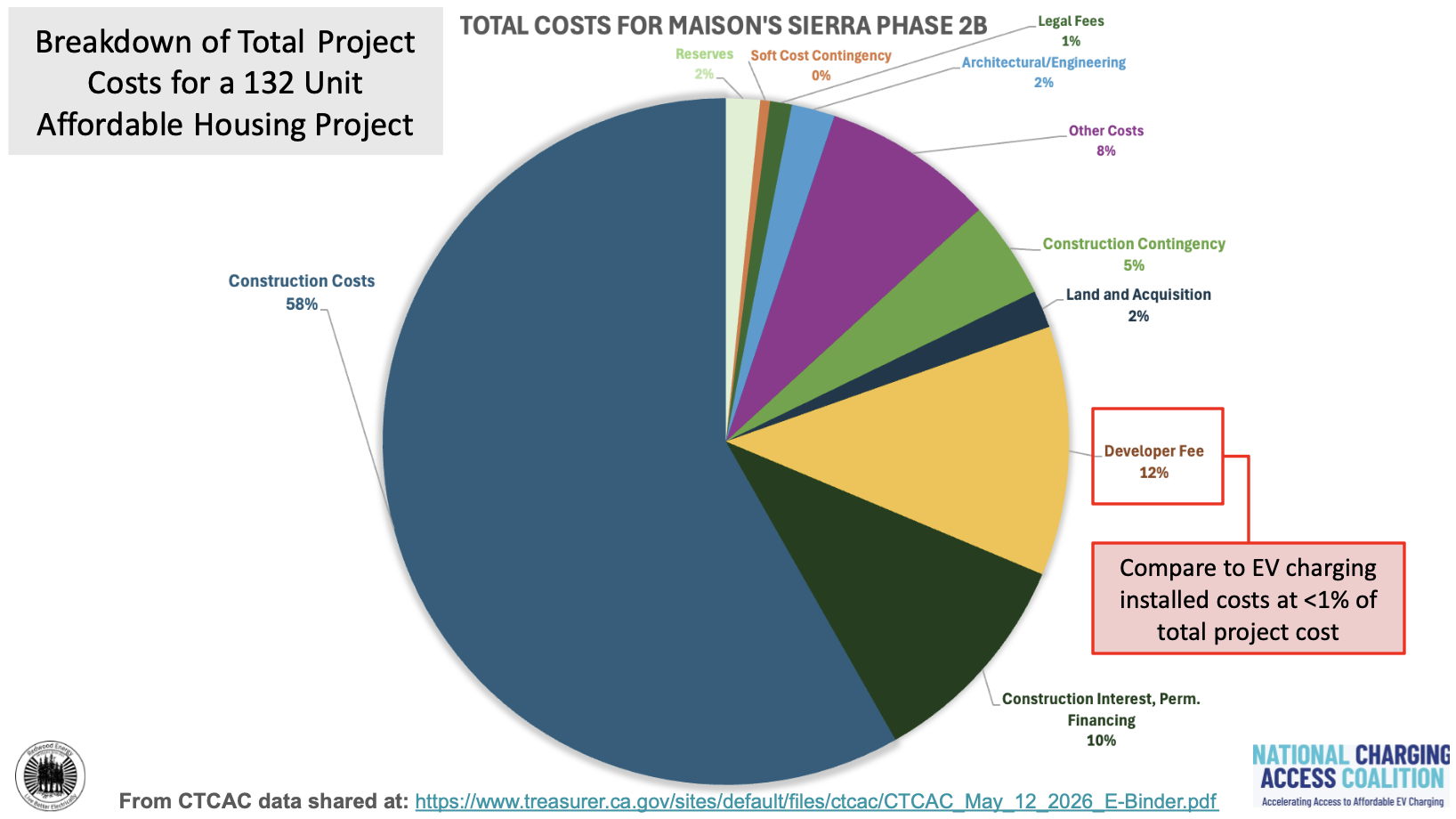
Figure 9. Summary of the cost components of a 132-unit affordable housing development.
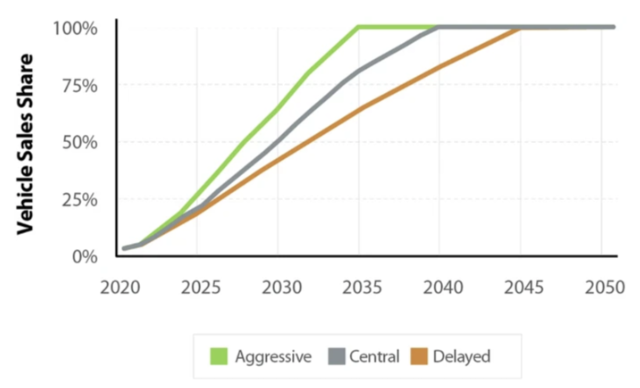
Figure 11. Projected nationwide EV sales shares in 3 scenarios.
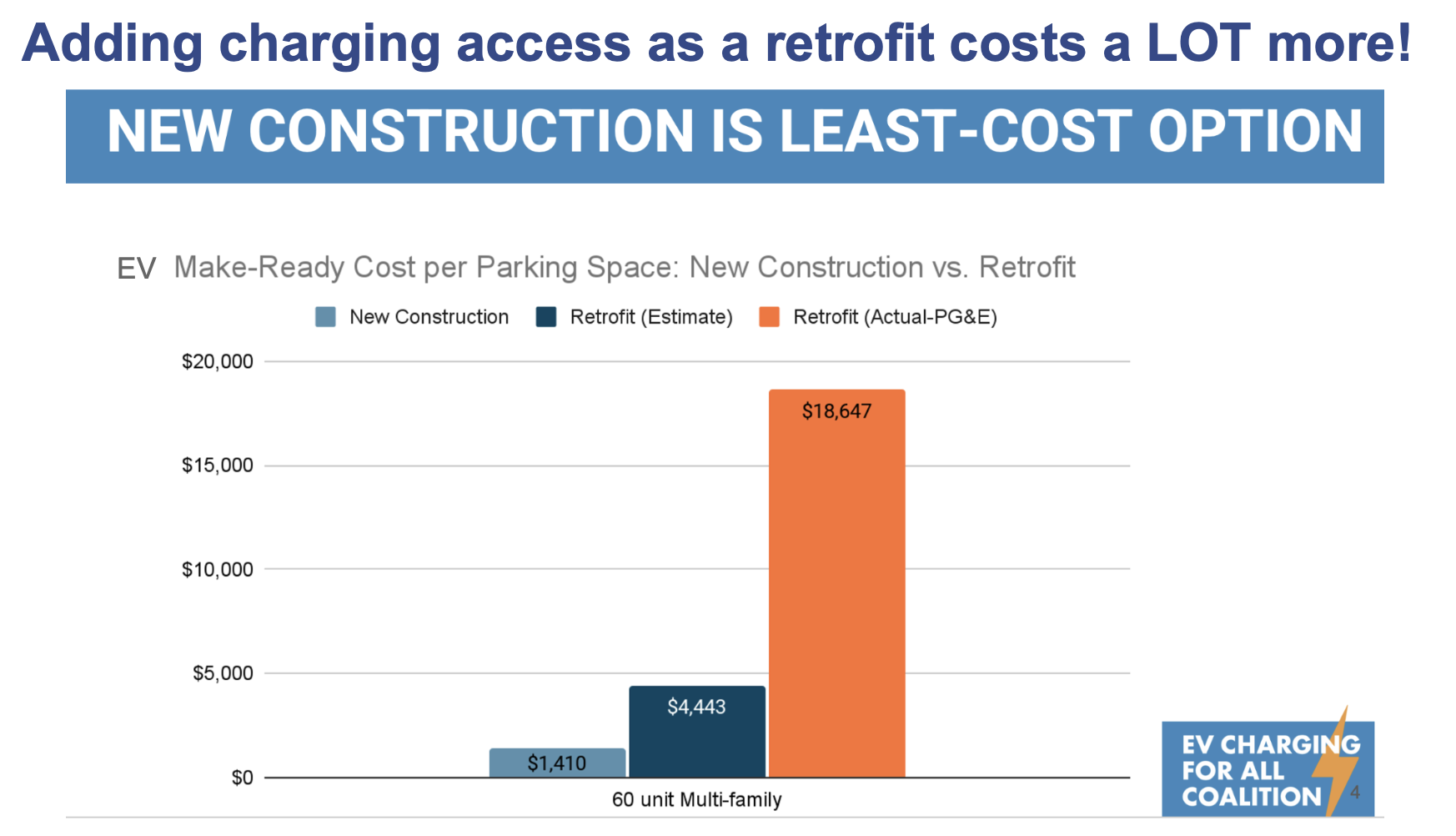
Figure 13. Comparison of cost to install charging access in MFH during construction vs. after.
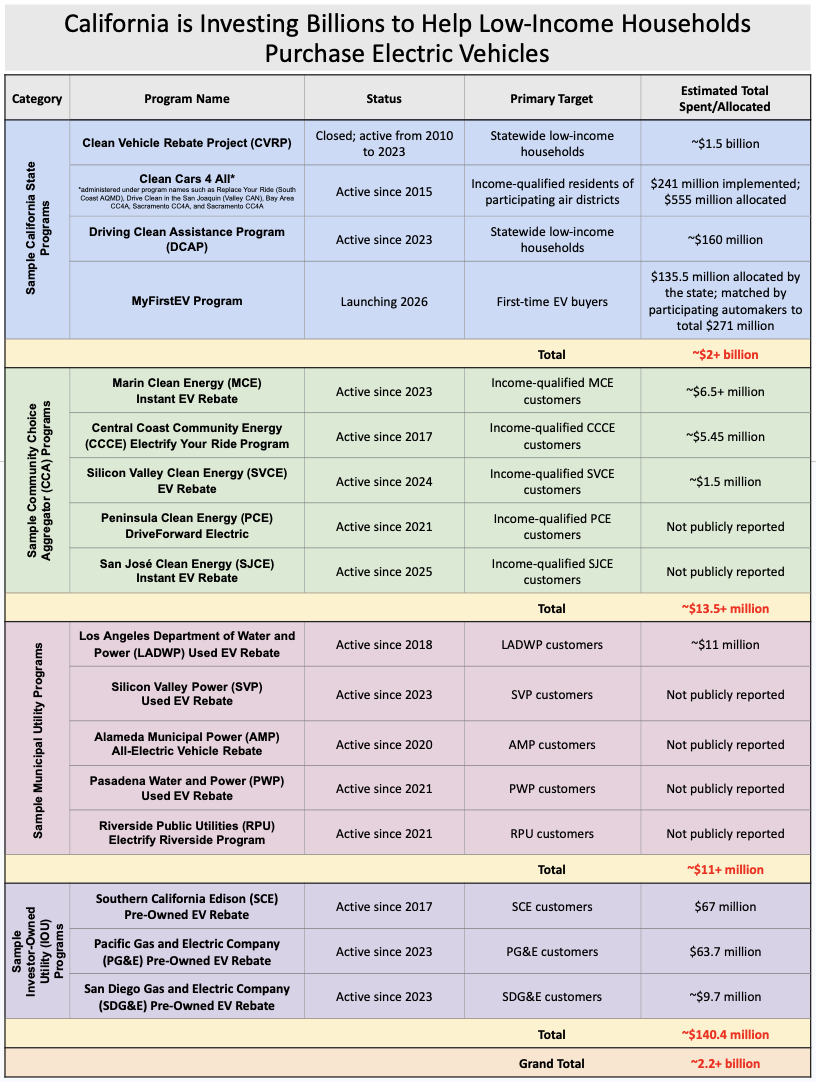
Figure 15. Summary of sample California state, CCA, and utility rebate and incentive programs that make EVs more affordable for low-income households.
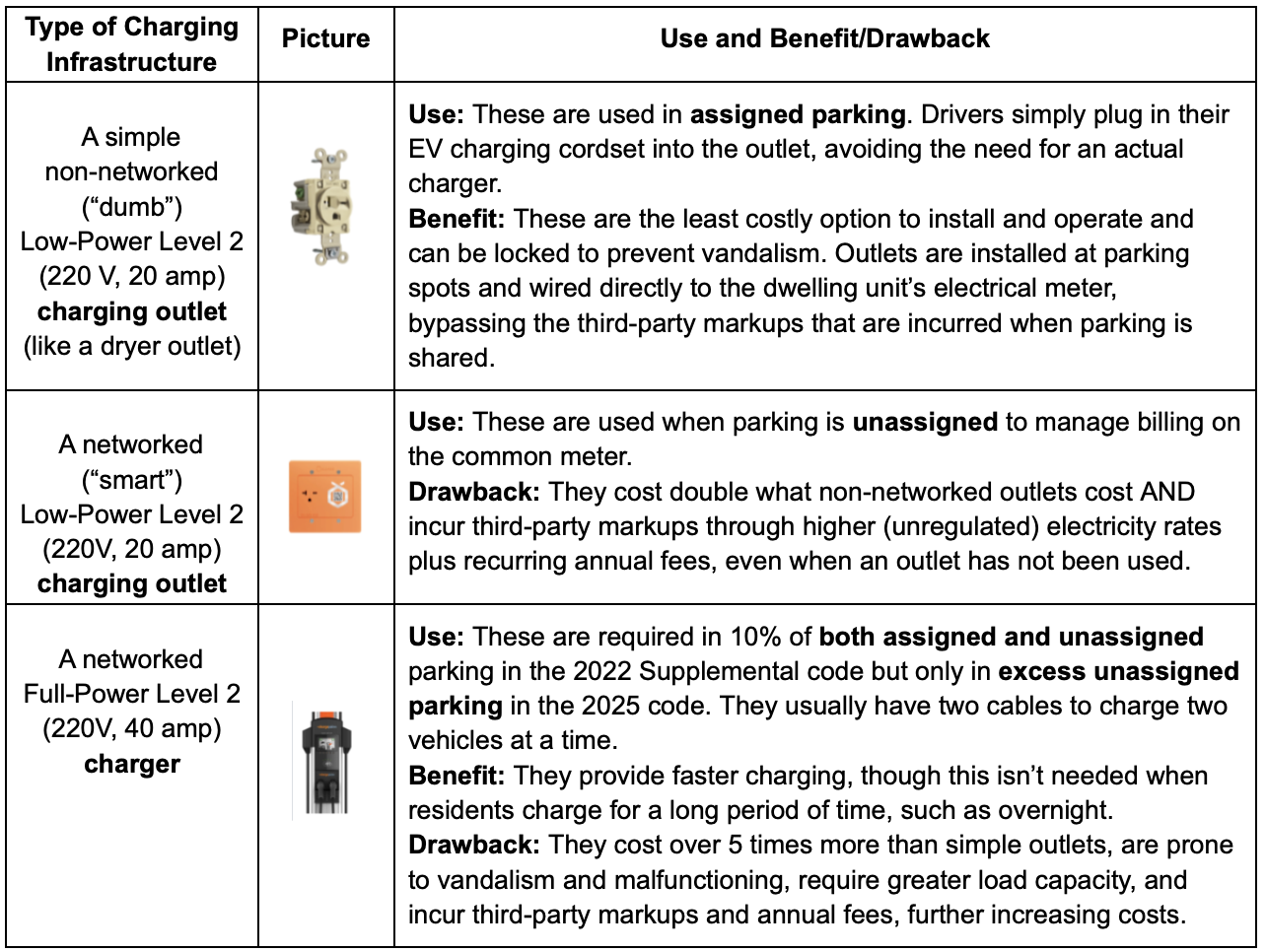
Figure 2. Summary of the three types of charging infrastructure required by the 2022 and 2025 CalGreen codes for multifamily housing.
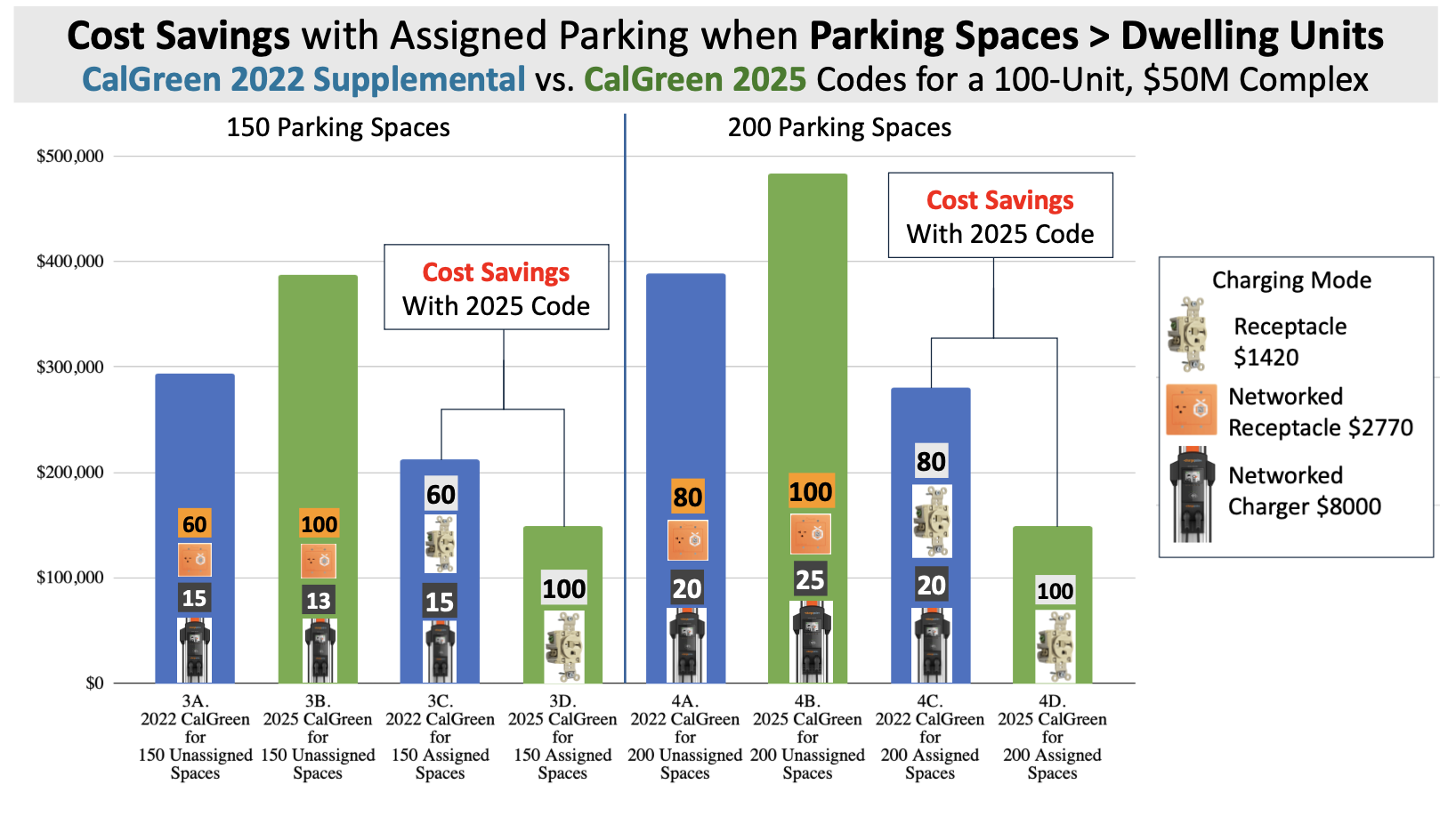
Figure 4. Costs when the number of parking spaces is greater than the number of dwelling units.
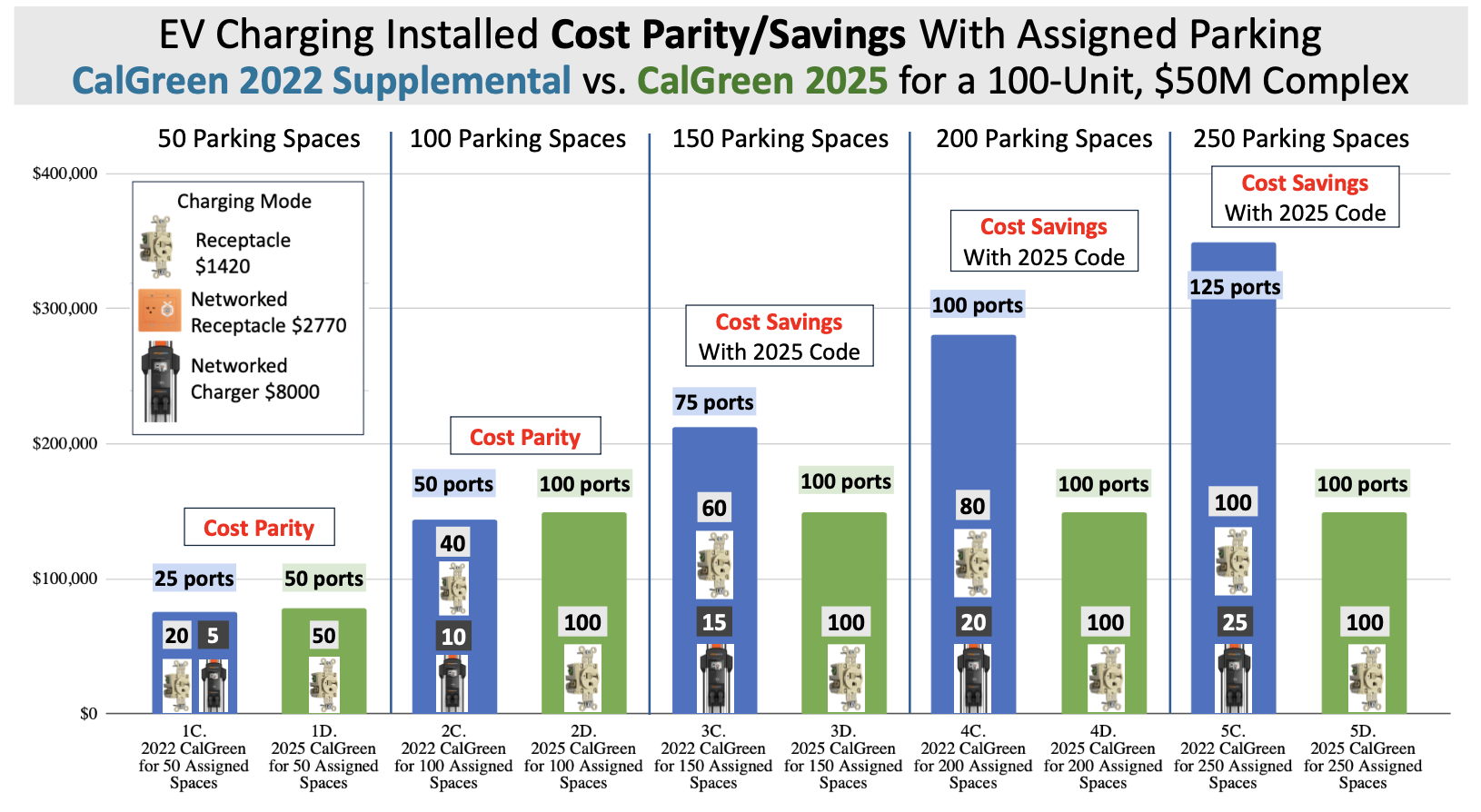
Figure 6. Costs and number of charging ports (receptacles or chargers) in assigned parking scenarios.
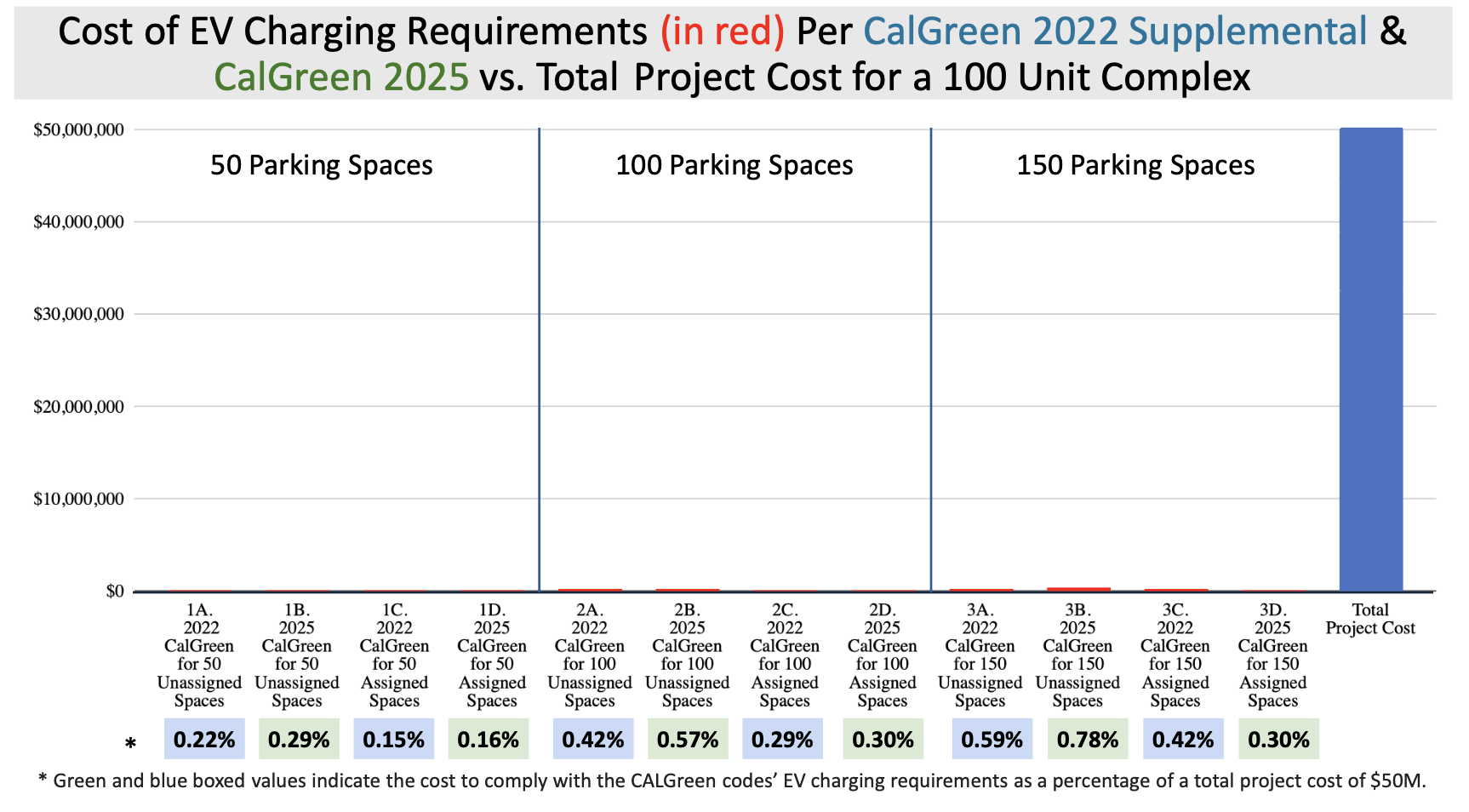
Figure 8. Cost of EV charging requirements (in red) vs. total cost per the 2022 Supplemental and 2025 CALGreen codes.
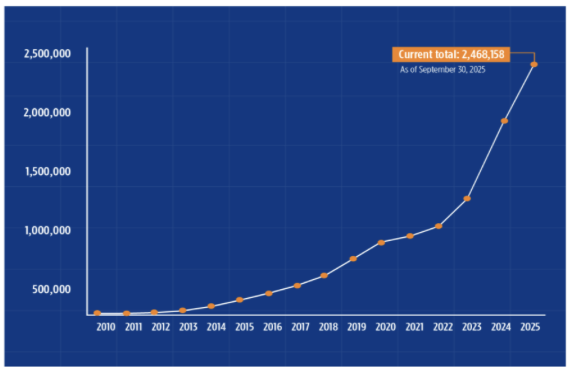
Figure 10. Past Zero-Emission Vehicle Sales in California
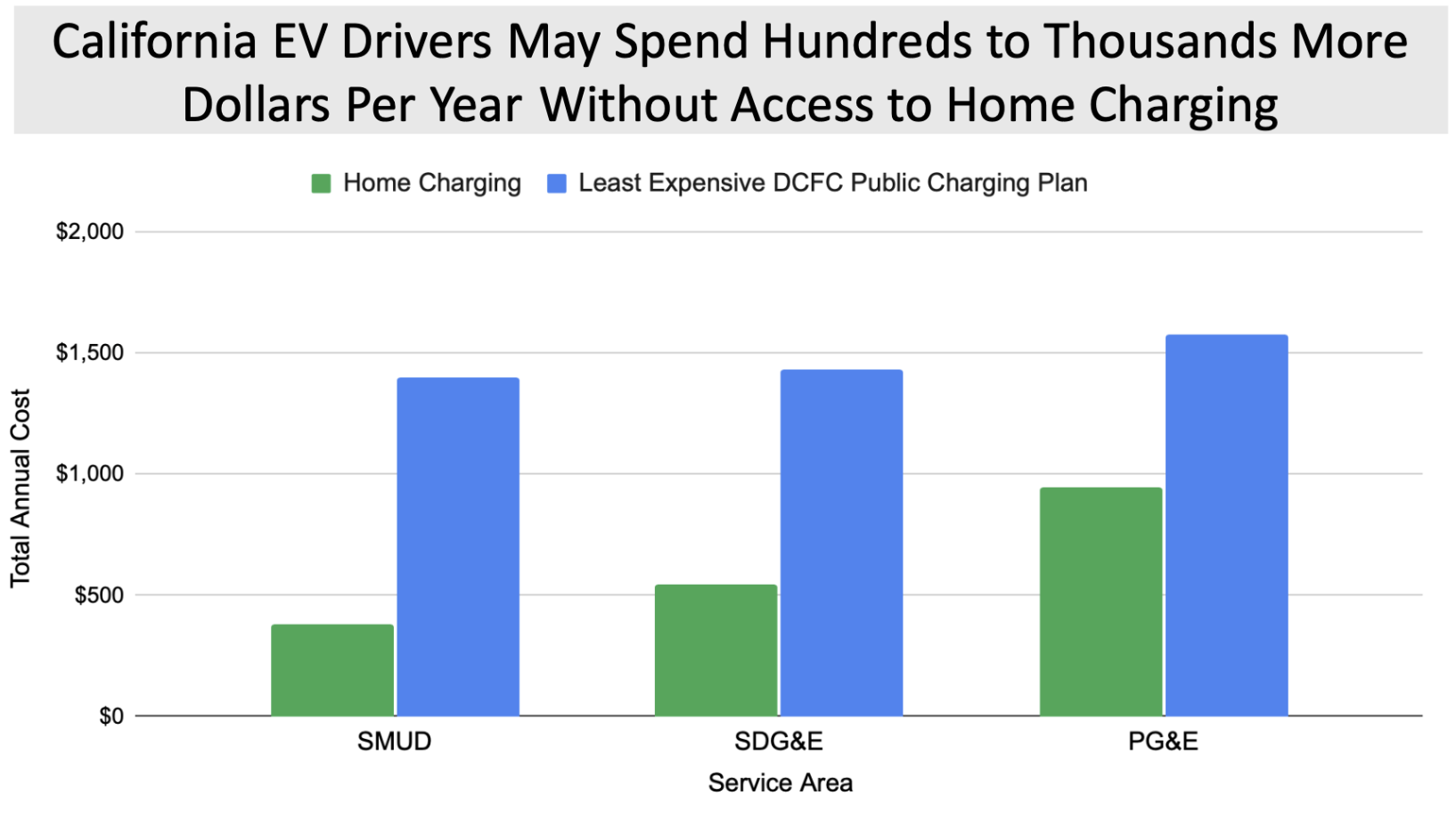
Figure 12. Annual cost to charge with home residential electricity rates versus the least expensive DCFC public charging plan (EVgo PlusMax Membership Plan with a $12.99 monthly subscription fee).
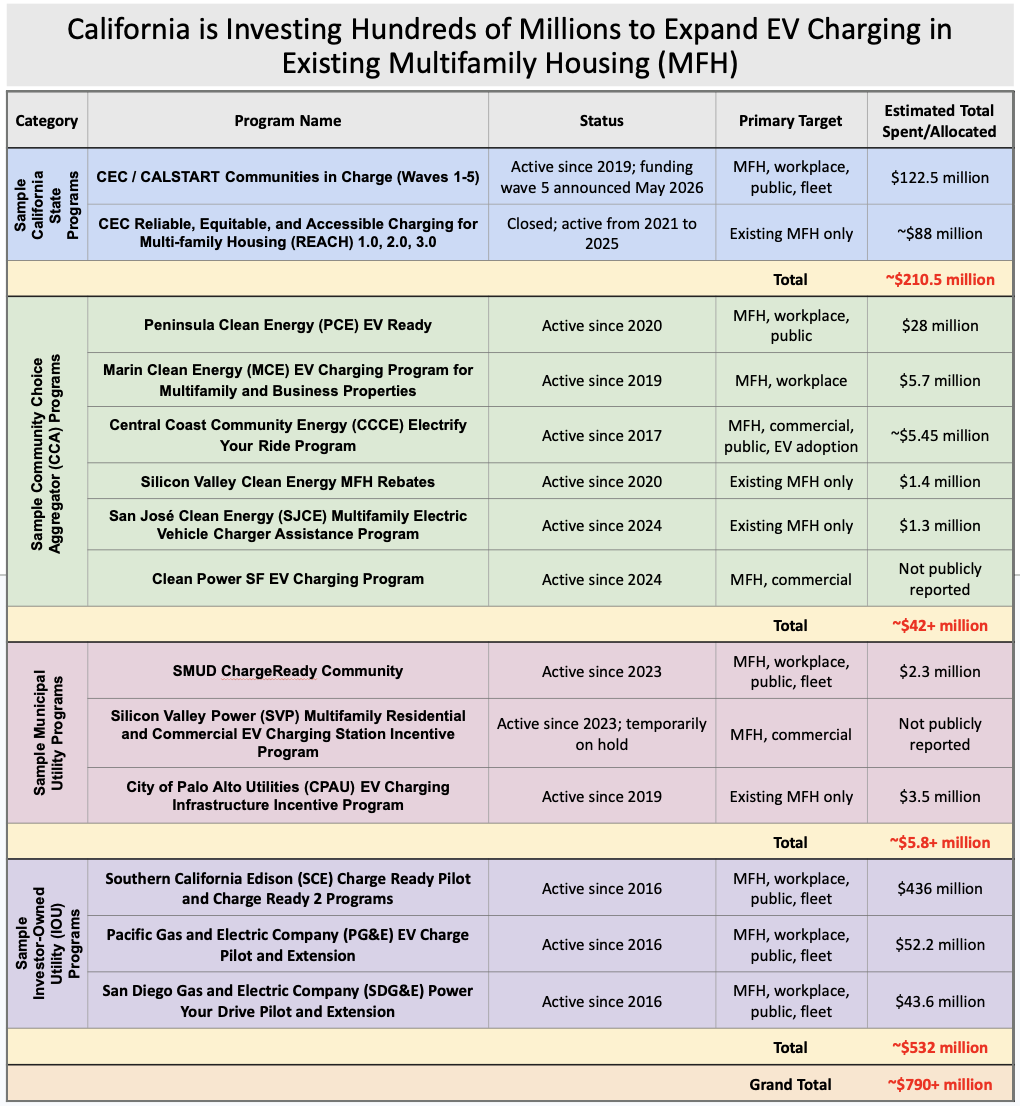
Figure 14. Summary of sample California state, CCA, and utility programs that fund EV charging retrofits in multifamily housing.
Additional Resources
Opposition Letters
Assembly Housing & Community Development (April 15, 2026)
Assembly Appropriations (April 27th, 2026)
Assembly (May 21, 2026)
Senate Housing (June 17, 2026)
Senate Appropriations (July 30th, 2026)